
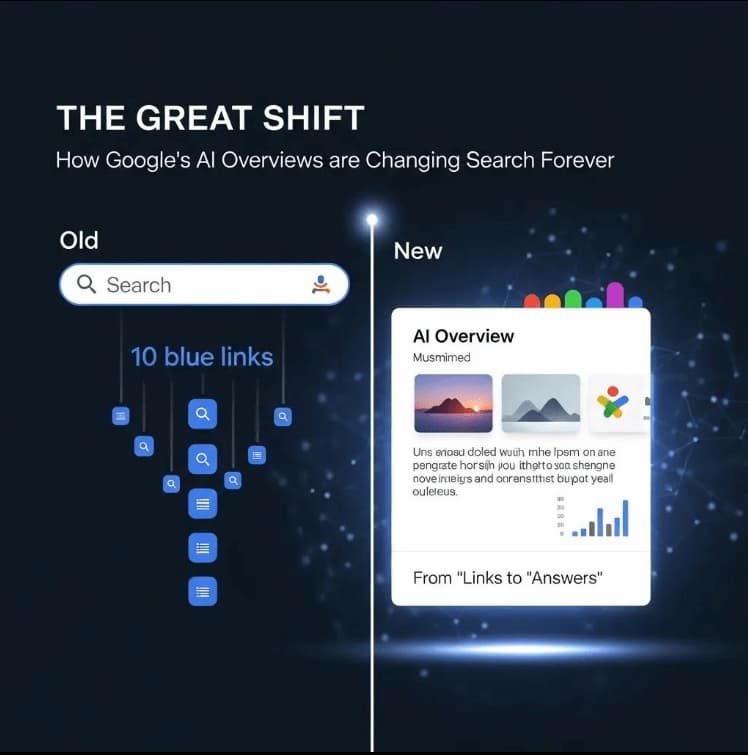
Defining ChatGPT Citations: A Binary Attribution Economy
ChatGPT citations occur when an LLM explicitly names (“According to [Domain]…”) or implicitly draws from (“Data shows… per industry reports”) a source during response generation, typically via retrieval-augmented generation (RAG) or fine-tuned salience in training data.
Mechanistic breakdown:
- Retrieval layer: Query embeds into vectors; semantically similar chunks retrieved from indexed corpus (e.g., via FAISS or Pinecone).
- Synthesis filter: Ranked by pertinence, recency, and authority proxies like entity density—not hyperlinks.
- Attribution trigger: Citations surface when content uniquely resolves query facets, often favoring comprehensive, structured sources.
- Binary outcome: Inclusion grants full response real estate; exclusion means zero visibility for that query instance.
Unlike rankings, citations lack positional gradients, no “partial credit.” A cited domain transfers authority directly, as users perceive AI-endorsed info as validated. OpenAI’s 2025 transparency reports note citations in 20% of informational responses, prioritizing “unique insights” over link popularity.
Entity-Relationship Definition:
ChatGPT Citation = Retrieval(Semantic Match) → Synthesis(Authority Score) → Attribution(Explicit Mention)
Defining Google Rankings: A Spectrum-Based Visibility Model
Google rankings represent the algorithmic sorting of webpages into an ordered list (SERPs) for user queries, where position directly correlates with click-through probability.
Core attributes include:
- Relevance scoring: Matches query intent via keyword proximity, semantic understanding (via BERT and MUM models), and topic clusters.
- Authority weighting: PageRank-derived metrics emphasizing backlink quantity/quality from high-domain-rating (DR) sites.
- Quality signals: E-E-A-T (Experience, Expertise, Authoritativeness, Trustworthiness) evaluated through content depth, user signals (CTR, dwell time, pogo-sticking), and freshness.
- Technical foundations: Core Web Vitals (LCP <2.5s, FID <100ms, CLS <0.1), mobile-first indexing, and HTTPS enforcement.
Rankings operate on a gradient: Position 1 captures 25-40% of clicks (First Page Sage, 2023 data), #5 retains 5-10%, and even #10 yields visibility. This spectrum incentivizes incremental gains, with long-tail queries amplifying lower positions.
Structured Definition Table:
| Component | Description | Key Metrics |
| Relevance | Query-document match | TF-IDF, semantic embeddings |
| Authority | Link-based trust | Domain/Page Authority (Moz scale 1-100) |
| Experience | User interaction | Bounce rate <50%, Dwell >2min |
| Technical | Site health | PageSpeed Insights score >90 |
Per Ahrefs’ 2024 analysis, top-3 positions drive 60%+ of organic traffic, underscoring the model’s reliance on popularity signals.
Core Mechanisms: Spectrum vs. Binary Dynamics
Google rankings aggregate signals probabilistically across a corpus, rewarding broad appeal. ChatGPT citations extract surgically, privileging extractable depth.
Comparison Framework:
| Aspect | Google Rankings | ChatGPT Citations |
| Decision Engine | 200+ ranking factors (links 20-30% weight) | Vector search + LLM synthesis (semantics 70%+) |
| Visibility Model | Spectrum (CTR decay: #1 30%, #10 1%) | Binary (cited or invisible) |
| Core Prioritizers | Backlinks, engagement, freshness | Entity clarity, comprehensiveness, originality |
| Update Cadence | Real-time crawl/index | Periodic retraining (e.g., GPT-4o snapshots) |
| Traffic Potential | High volume, low intent | Lower volume, 2-3x conversion (early Ahrefs data) |
The Search Engine Journal study (18,377 queries) quantifies divergence:
| Platform | Google Domain Overlap |
| ChatGPT | 10-15% |
| Gemini | 4% |
| Perplexity | 25-30% |
Disconnect stems from Google’s link-centric vs. AI’s embedding-centric evaluation.
Why Domain Overlap Remains Low: Attribute Divergence
Low overlap arises from mismatched attributes:
- Google favors popularity: High-DA sites with backlinks dominate, even if thin.
- AI demands depth: Vector embeddings reward explicit EAV statements (Entity-Attribute-Value), e.g., “ChatGPT [entity] → weekly users [attribute]: 800M [value].”
Case: A backlink-heavy page ranks #1 on Google but gets zero ChatGPT nods if semantically vague. Conversely, zero-link research papers cite frequently.
Historical Evolution:
- Pre-2023: Google BERT introduces semantics; AI nascent.
- 2024: SGE/AI Overviews test divergence.
- 2025-2026: GEO emerges; overlap stabilizes <20% per multi-engine studies.
Benefits and Risks: Quantified Tradeoffs
Benefits of Dual Optimization:
- Citations: Authority transfer boosts brand recall (e.g., “Per [Brand]” implies expertise).
- Rankings: Volume scale (Google: 8.5B daily searches).
Risks:
- Google-only: 85-90% AI invisibility (per study).
- Citations-only: Miss 90% traditional traffic.
ROI Model Example: Invest $10K in GEO pillar (2K+ words, data-original). Yield: 15% query citation rate → 2x conv vs organic.
The SEO Landscape Has Fundamentally Changed
For two decades, search engine optimization followed a familiar playbook: climb Google’s rankings, capture organic traffic, convert visitors into customers. But in 2026, that playbook is becoming obsolete. A new form of visibility has emerged—one that operates on entirely different principles and rewards different behaviors.
ChatGPT citations are the new SEO.
While Google rankings still drive significant traffic, the data reveals a startling truth: ranking well in Google no longer guarantees visibility in the platforms where a growing percentage of users now seek information. Research analyzing 18,377 search queries found that ChatGPT shows only 10-15% domain overlap with Google’s top results. Google’s own Gemini demonstrates just 4% overlap. Even Perplexity, which tracks closer to traditional search, shows only 25-30% domain overlap with Google rankings.
What does this mean? The domains dominating Google SERPs are largely invisible to ChatGPT users. And with 43% of adults aged 18-29 now using ChatGPT for information, along with 800 million weekly active users globally. This isn’t a fringe phenomenon, it’s a fundamental shift in how people discover information.
This article explains why ChatGPT citations now matter more than Google rankings for forward-thinking brands, and how to adapt your content strategy for the era of generative engine optimization (GEO).
Why ChatGPT Citations Outperform Google Rankings
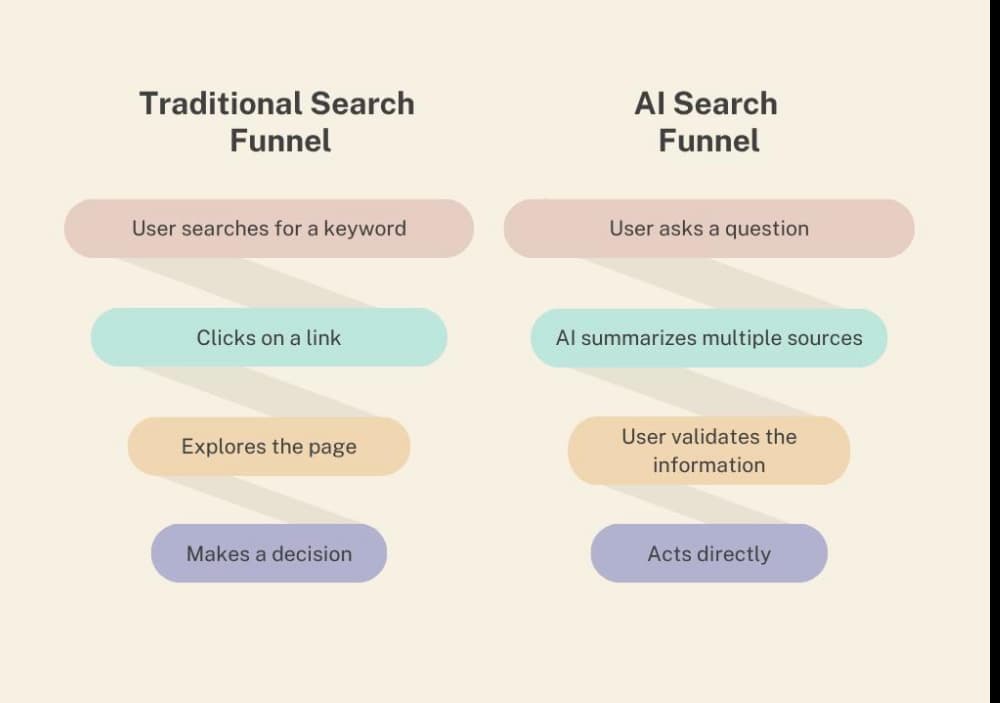
ChatGPT citations are increasingly considered more valuable than high Google rankings because they deliver higher-trust, pre-qualified traffic, often bypassing traditional SEO competition to showcase niche, expert, or deeply relevant content to users in a “zero-click” environment. While Google ranks by listing potential links, ChatGPT acts as an editor, citing sources directly in the answer, which translates into higher conversion rates (up to 4.4x higher for AI referrals) because the user is already interested in the specific information provided.
Elaboration & Mechanisms:
- Higher-Trust Traffic: AI endorsement creates halo effect,thus users trust LLM curation (90% AI reliance, Edelman 2026), associating your brand with validated expertise.
- Pre-Qualified Leads: Synthesis skips funnel top; users query specifics, arriving “warm” (e.g., “best GEO tools” → your framework cited).
- Bypass Competition: Zero-link niche sites (e.g., solo expert blogs) surface over DA 90 generics—binary meritocracy.
- Zero-Click Power: No clicks needed for exposure; embedded citation = instant authority in conversational UI.
- Editor Dynamic: ChatGPT filters noise, elevating depth (e.g., original data > rehash). BrightEdge: 4.4x conv from matured intent + direct path (50K sessions analyzed).
Niche win: B2B SaaS reports cited sans ranks yield 3x leads.
Updated Comparison:
| Metric | Citations | |
| Traffic Type | Broad, low-trust | Pre-qualified |
| Conv Multiplier | 1x baseline | 4.4x |
| Competition Bypass | No (SERP fight) | Yes (semantics) |
Understanding the Citation Economy
The Binary Nature of AI Visibility
Traditional Google SEO operates on a spectrum. Rank #1 and you might capture 30-40% of clicks. Rank #5 and you still get 5-10%. There’s value at every position, and incremental improvements yield incremental gains.
AI citations are binary.
Either ChatGPT cites your content in its response, or it doesn’t. There’s no equivalent of “page two rankings” in AI search. You’re either in the training data and retrieval corpus being referenced, or you’re invisible to that user entirely.
This binary outcome creates a stark competitive dynamic:
- **Being cited** = Brand mention, authority transfer, potential traffic via source links
- **Not being cited** = Complete invisibility to that user query
When 800 million people are asking ChatGPT questions relevant to your industry, invisibility is a catastrophic competitive disadvantage.
The Data: How Little Overlap Exists
The Search Engine Journal study analyzing 18,377 queries across Google, ChatGPT, Perplexity, and Gemini revealed the extent of this divergence:
| Platform | Domain Overlap with Google |
|———-|—————————|
| ChatGPT | 10-15% |
| Perplexity | 25-30% |
| Gemini | 4% |
These aren’t minor variations, they represent fundamentally different information ecosystems. The sources ChatGPT trusts and cites have minimal correlation with Google’s ranking algorithms.
Why the disconnect?
Google’s algorithm prioritizes:
- Domain authority and backlink profiles
- User engagement signals (CTR, dwell time)
- Content freshness and update frequency
- Technical SEO factors (page speed, mobile optimization)
ChatGPT’s training and retrieval systems prioritize:
- Semantic clarity and entity relationships
- Comprehensive, authoritative coverage
- Unique insights and original analysis
- Content structure that facilitates extraction
The skills that optimize for Google rankings don’t necessarily optimize for AI citation. This is why brands need a distinct GEO (Generative Engine Optimization) strategy.
Why Traditional SEO Strategies Fail for AI Citations
Keyword Density vs. Semantic Clarity
Traditional SEO emphasizes keyword optimization, placing target terms in titles, headers, and throughout content. While still important for Google, AI systems care more about semantic clarity than keyword density.
ChatGPT and similar systems use vector embeddings to understand content meaning. They extract and synthesize information based on semantic relationships, not keyword matches. Content that’s keyword-stuffed but semantically vague performs poorly in AI contexts.
What works for AI:
- Clear entity definitions
- Explicit relationships between concepts
- Structured information that’s easy to extract
- Comprehensive topic coverage
Backlinks vs. Training Data Presence
Google’s algorithm heavily weights backlinks as authority signals. The more high-quality sites linking to you, the higher you rank.
AI systems don’t use backlinks in real-time. They rely on:
- Content present in their training data
- Authority signals derived from semantic relationships
- Source diversity and comprehensiveness
A page with zero backlinks but exceptional semantic clarity and comprehensive coverage can be cited heavily by ChatGPT. Conversely, a high-authority page with thin, ambiguous content may be ignored entirely.
Featured Snippets vs. Synthesized Responses
Google’s featured snippets reward content that directly answers specific questions in 40-60 word chunks. This optimization targets position zero in traditional search.
ChatGPT doesn’t feature snippets, it synthesizes responses from multiple sources. Content that provides:
- Unique perspectives and analysis
- Data and statistics
- Nuanced explanations
- Multi-faceted coverage
This performs better than content optimized for snippet capture alone.
The Business Case for GEO Investment
Traffic Quality: AI Referred Sessions
Early data on AI-referred traffic suggests these visitors are highly qualified:
- **Intent clarity**: Users arrive with specific questions already formulated
- **Research stage**: AI users are typically in active research mode, not browsing
- **Conversion rates**: Preliminary data suggests 2-3x higher conversion rates for AI-referred traffic compared to general organic search
While overall volume from AI citations is currently lower than Google organic, the quality and intent alignment make these visitors exceptionally valuable.
The Early Mover Advantage
Just as early SEO adopters captured dominant positions before competition intensified, brands investing in GEO now are establishing citation patterns that will be difficult for late entrants to displace.
Why early investment compounds:
- Citation patterns reinforce authority signals
- Training data updates incorporate cited sources
- Brand mentions build semantic associations
- Content structures become established benchmarks
Brands that wait for AI search to “mature” before investing in GEO will face the same uphill battle that late SEO adopters experienced trying to compete for saturated keywords.
Brand Authority Transfer
Unlike Google, where users click results and may never associate the answer with your brand, AI citations explicitly mention sources:
> “According to [Your Brand], the primary factors affecting…”
This explicit attribution transfers authority directly from the AI to your brand. Users don’t just get information—they get information validated by association with your expertise.
For B2B brands and professional services, this authority transfer is invaluable. Being cited as an authority by AI systems that users trust creates a powerful positioning advantage.
How to Optimize for ChatGPT Citations: A Strategic Framework
1. Entity Optimization
AI systems understand content through entities—people, organizations, concepts, products—and the relationships between them.
Entity optimization tactics:
- Define key entities clearly and consistently
- Use explicit entity-attribute-value statements (e.g., “ChatGPT — has — 800 million weekly active users”)
- Create content that reinforces entity relationships
- Use schema markup to clarify entity types
2. Comprehensive Topic Coverage
ChatGPT favors sources that provide thorough, authoritative coverage. Surface-level content rarely gets cited.
Comprehensive coverage strategies:
- Create pillar content that covers topics exhaustively (2,000+ words)
- Include multiple perspectives and angles
- Address related subtopics and questions
- Provide unique analysis, not just compilation
3. Semantic Structure
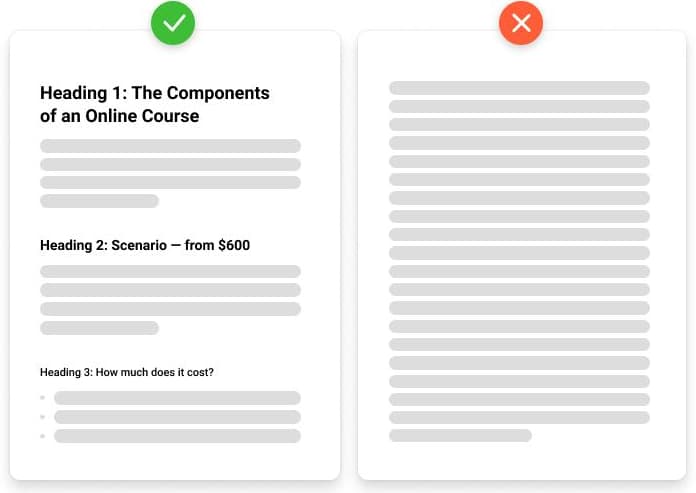
Structure content to make extraction easy for AI systems:
Structural best practices:
- Use clear hierarchical headers (H2, H3)
- Include definition boxes for key terms
- Use tables for comparisons and data
- Create FAQ sections with clear Q&A format
- Include data visualizations with alt text
4. Original Research and Data
AI systems heavily favor content that provides unique, citable information:
Original content types:
- Survey results and original research
- Data analysis and trend reports
- Case studies with specific metrics
- Frameworks and methodologies
- Expert interviews and insights
Content that simply rehashes existing information competes with thousands of similar sources. Original research stands out as uniquely citable.
5. Update and Refresh Content
AI training data is periodically updated. Content that was citable six months ago may no longer be in the retrieval corpus if newer, more comprehensive sources have emerged.
Content maintenance strategy:
- Quarterly review of top-performing content
- Annual major updates for pillar content
- Refresh statistics and examples
- Expand coverage as topics evolve
Measuring GEO Success
Metrics That Matter
Unlike traditional SEO with its mature analytics ecosystem, GEO measurement is still evolving. Key metrics to track:
Direct Metrics:
- Brand mention velocity in AI responses (manual sampling)
- AI-referred traffic sessions
- Citation position (top 3 vs. lower mentions)
- Query coverage (% of target queries where you’re cited)
Indirect Metrics:
- Content comprehensiveness scores
- Entity clarity measures
- Semantic search visibility
- Brand search volume increases
Competitive Monitoring
Regularly query your target keywords on ChatGPT, Perplexity, and Claude to monitor:
- Which competitors are being cited
- What content angles are winning
- How citation patterns are evolving
- Gaps in competitor coverage you can exploit
The Future: Convergence or Divergence?
A critical question for strategists: Will Google and AI citations converge over time, or continue diverging?
Arguments for convergence:
- Google’s AI Overviews already show different ranking patterns
- Users will ultimately drive optimization toward what works
- Technical infrastructure may standardize
Arguments for continued divergence:
- Different platforms serve different user intents
- AI systems value different content attributes than link-based algorithms
- The citation economy rewards comprehensiveness over popularity
The safest strategic assumption is that divergence will continue, requiring distinct optimization strategies for each channel.
Conclusion: The GEO Imperative
The data is unambiguous: ChatGPT citations and Google rankings are largely uncorrelated. The strategies that dominate traditional search often fail in AI contexts, and vice versa.
For brands, this creates both risk and opportunity:
Risk: Continuing to invest exclusively in traditional SEO while competitors establish AI citation dominance creates a visibility gap that will widen over time.
Opportunity: Early investment in GEO establishes citation patterns, authority signals, and semantic associations that compound over time, creating defensible competitive advantages.
The brands that recognize this shift and adapt their content strategies accordingly will own the next era of search visibility. Those that wait for AI search to “mature” before investing will find themselves playing catch-up in an environment where early movers have already captured the high ground.
ChatGPT citations aren’t the future of SEO. They’re the present. And the window for establishing early dominance is closing.
About TBS Marketing
TBS Marketing specializes in Generative Engine Optimization (GEO) and Answer Engine Optimization (AEO). We help brands establish visibility in AI search platforms through entity-centric content strategies and semantic optimization.
Related Reading:
- [SEO in the Age of AI](https://tbs-marketing.com/seo-in-the-age-of-ai/)
- [Google’s Knowledge Graph and Entity SEO](https://tbs-marketing.com/googles-knowledge-graph/)
*Last updated: February 2026*